
Home improvement research professionals from across the industry converged this September at the Home Improvement Research Institute’s 2024 Home Improvement Insights Summit, sharing valuable perspectives and the latest forecasts on the industry. The event featured speakers with extraordinary knowledge in a diverse range of subjects, each offering unique insights into the ever-evolving world of home improvement.

Let’s dive into the key takeaways from each speaker at this year’s Summit and explore how those takeaways can shape the 2025 go-to-market strategies of home improvement suppliers and manufacturers.
Soft Landing for the Fed, but Nice Runway for HousingEric Lynch, National Association of Home Builders |
 |
Top Takeaways
- Interest rate cuts by the Federal Reserve will be welcome relief for homebuilders and, additionally, will also help their fight to drive down inflation.
- While homebuyer demand remains strong, supply-side factors continue to plague builders from increasing production and reducing the housing deficit further.
- The home building industry will have a good runway through the end of the decade, but the future becomes murky afterward.
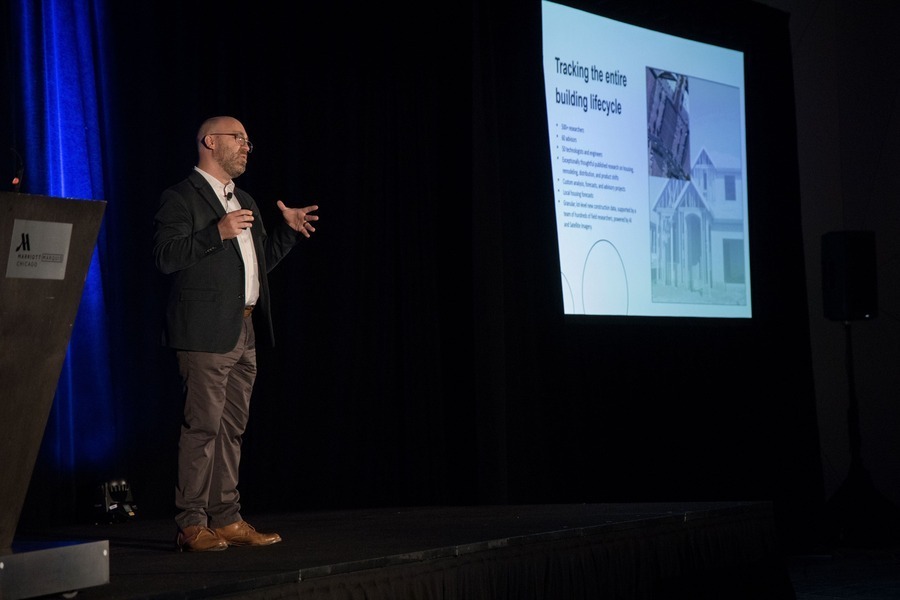
Not in Kansas Anymore: The Shifting Home Improvement Market 2025+Todd Tomalak, Zonda |
 |
Top Takeaways
- Home Improvement spending is softening significantly mid-2024, with Risks to Building Products are culminating now particularly with large swings in DIY and PRO demand. We see more risk in ‘mid-range’ remodels than previously forecast.
- The story of 2024 is ‘deferral’, which is increasingly looking similar to the deferral/rebound path of the early 1980’s, but with far higher home equity, which changes the pace of growth. We continue to refine our view timing of long-term demand, and believe the 2026 – 30 equilibrium is significantly higher than 2024 levels, but the exact timing is difficult to pin down.
- Change is underway in distribution. Concentration of industry profits within a few outstanding brands is plausible. Brand strength, pro contractor, and execution to drive large differences in results 2025+

Core Drivers of Home Improvement Spending and Regional VariationsAbbé Will, Harvard’s Joint Center for Housing Studies |
 |
Top Takeaways
- The share of homeowners making improvements on their homes remains stable, at 1 in 3. It is good to see this stability year over year.
- There are more Baby Boomers spending on home improvement, and spending more, compared to when the Silent Generation was the same age as Boomers are now.
- The aging population of homeowners is contributing to the decline in the share of DIY activity.
- Homeowners earning incomes in the top 5%, meaning $150,000+, consistently account for roughly half of all remodeling activity despite changes in the business cycle and complete about 80% of projects with Pros.
- Owners with home values that make up the top quintile reliably account for $2 out of $5 of home improvement spending.
From the Front Lines: The Pro’s Perspective Panel
Jennifer Castenson, Buildxact
Bruce Case, Case Architects & Remodelers
David Pollard, Liv Companies

Top Takeaways
- Remodelers are still struggling to get back to consistency and understand what’s coming next
- Pros are seeking out expert relationships with suppliers to know they are choosing the right product for the given job and want to have access to technical support options when they are on the job site. Pros value manufacturers and suppliers who make their jobs easier.
- Firms are orienting projects more around use of specialist Pros than generalist Pros
- Interpersonal skills of employees remain a challenge faced by Pro businesses
Current Contractor Attitudes Impacting Decision MakingGrant Farnsworth, The Farnsworth Group |
 |
Top Takeaways
- Homeowner uncertainty and financial decisions are impacting contractor behaviors. This uncertainty means contractors and business must bring options and confidence to consumers that have a desire to do home improvement projects, but are hesitant.
- Pros will continue to face budget pressure throughout next year, which is being impacted not only by homeowners, but labor and material costs. Those brands that can support contractors by addressing their challenges will win.
- Gaining and keeping loyal customers will be key to growth in a competitive environment. Promotions are an effective way to get an already fluid customer base to try your brand but should be tertiary to providing a strong value proposition.
Cultivating Loyalty through the Power of Customer DataLeigh Wildman, Lowe’s |
 |
Top Takeaways
- 79% of customers are a part of an average 18 loyalty programs, but only actively engaged in 50% of loyalty programs.
- Organizations need to make efforts to identify, retain, and recapture switchers.

Consumer Insights: Power ShiftSara Gutterman, Green Builder Media |
 |
Top Takeaways
- There are distinct generational differences on sustainability and housing market trends. The key values, sustainable home upgrade priorities, and lifestyle preferences of Baby Boomer, Gen X, Millennial, and Gen Z homeowners/buyers differ.
- In order to connect and build trust with members of each generation through purpose-driven marketing, you need to align with how they are viewing smart home adoption needs.
Consumer Demand for Energy SavingsGenevieve Becker, Thumbtack |
 |
Top Takeaways
- The rising demand for energy-efficient solutions, such as EV charging and solar panels, presents significant opportunities for professionals and suppliers in the home improvement market.
- The wider adoption of energy-efficient solutions is hindered by barriers such as high upfront costs, limited awareness, and sourcing challenges. Addressing these barriers is crucial for market expansion.
- Collaboration and education among suppliers, retailers, and professionals are essential to overcome these challenges and unlock the full potential of the energy-efficient home improvement market.

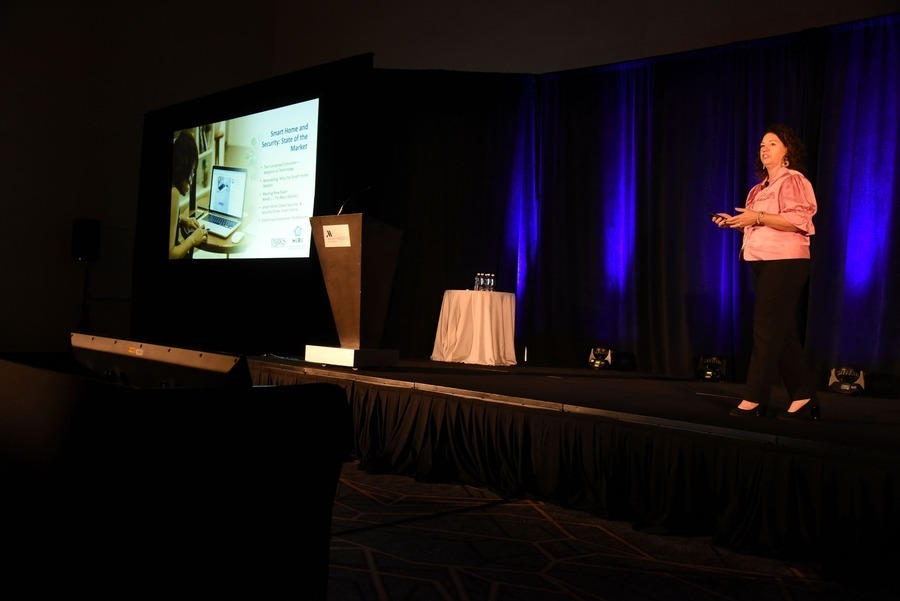
How Smart Home Technology is Changing the Home Improvement LandscapeElizabeth Parks, Parks Associates |
 |
Top Takeaways
- The rising adoption of connected health devices is probably contributing to the increased length of time the elderly staying in their homes.
- In 2018, early adopters comprised the majority of the market, but by 2023, the early majority are now the primary group of buyers.
- Consumers don’t want a large number of apps to have to manage independently.
- Tech giants are making swift moves within this category because of the data, and they are each fighting to be the primary owner and integrator, establishing their preferred mode of interoperability across ecosystems. The ‘Matter’ Smart Home Standard is one way the ecosystem is being built.
Stylish Trends to Timeless Designs: A Decade of Data on Home Remodeling with HouzzLiza Hausman, Houzz |
 |
Top Takeaways
- 70% of existing homes are older than 20 years; the median age of a house in 40 years.
- Homeowners are renovating for the long run primarily, stating intent to be in their home for 11 – 12 years.
- People are wanting cozier feeling spaces with warmer colors, tones, and materials.
- The manufacturing lag of building products does not really allow for a “fast fashion” esc result of homeowners having greater access to research tools and design visualizers.
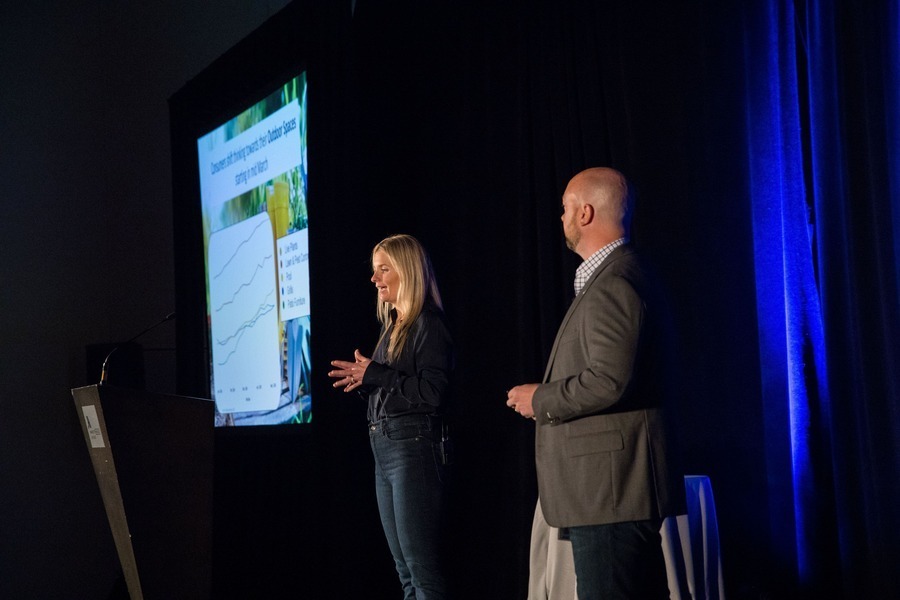
Trends Among Today’s Omnichannel Home Improvement ShoppersJosh Banfield and Shea Browning, Google |
 |
Top Takeaways
- Google and YouTube are among the leading media channels used to research home services, with 90% of researchers using Google, and 84% using YouTube.
- Most shopping is now inherently Omni, 73% of purchases are either made online or influenced by online touchpoints.

How AI Will – and Won’t – Affect the Home Improvement IndustryLynne Thomson, Microsoft |
 |
Top Takeaways
- Robots: Labor continues to be a problem for contractors, but AI-enabled construction workers are still a long way in the future.
- Virtual Spaces: Customer indecision is a persistent problem especially for small contractors. Simple and affordable 3D software for remodeling will help Contractors get their customers to yes faster. Manufacturers will likely need to help get the tools built and into the hands of small contractors.
- Omni-channel retailing: Home improvement leads in omni-channel retailing for pros. New avatars make it possible to kindle a relationship with tech savvy consumers/DIYers.
The Home Improvement Research Institute was thrilled with the wealth of knowledge shared at the 2024 Insights Summit. We hope you found this summary — and, if you joined us in Chicago, the event — valuable as well. How will you leverage this knowledge to craft tailored strategies that resonate with changing consumer preferences, market dynamics and the evolving home improvement landscape?
To get access to ongoing home improvement research and receive a discounted rate for next year’s Insights Summit, become a HIRI member today.